
Why Are Leftovers Cold in the Middle?
A magnetron fills the box with 2.45 GHz microwaves. Most of their energy lands in the outer layer of the food, so the middle waits.
Read the full teardown
How a Microwave Oven Heats Food (and Why the Middle Stays Cold)
A microwave oven steps up wall power to a high voltage, and a tube called a magnetron uses it to make microwaves at about 2.45 gigahertz. The waves bounce around the metal box and are absorbed by water and salts in food, which heat up. Most of that energy is absorbed within a few millimeters to about a centimeter and a half of the surface, so the middle of a thick portion warms only as heat conducts inward. That’s why you stir it and let it stand.
Transcript
Your leftovers are scalding at the edges, and cold in the middle. How? Let's cut it open. The box fills with microwaves, at 2.45 gigahertz. They come from the magnetron, a tube that turns electricity into microwaves. Their field flips billions of times a second. Water molecules in your food twist to keep up. That jostling becomes heat. The plate barely absorbs them, so it only warms from the food. But the waves fade fast. Most of their energy lands in the outer centimeter or so. The middle waits for that heat to creep in. The waves bounce off the metal walls, leaving hot and cold spots. That's why your plate spins. So stir it halfway, then let it stand. Otherwise, hot edges and a cold middle.
More Shorts
 56 sec
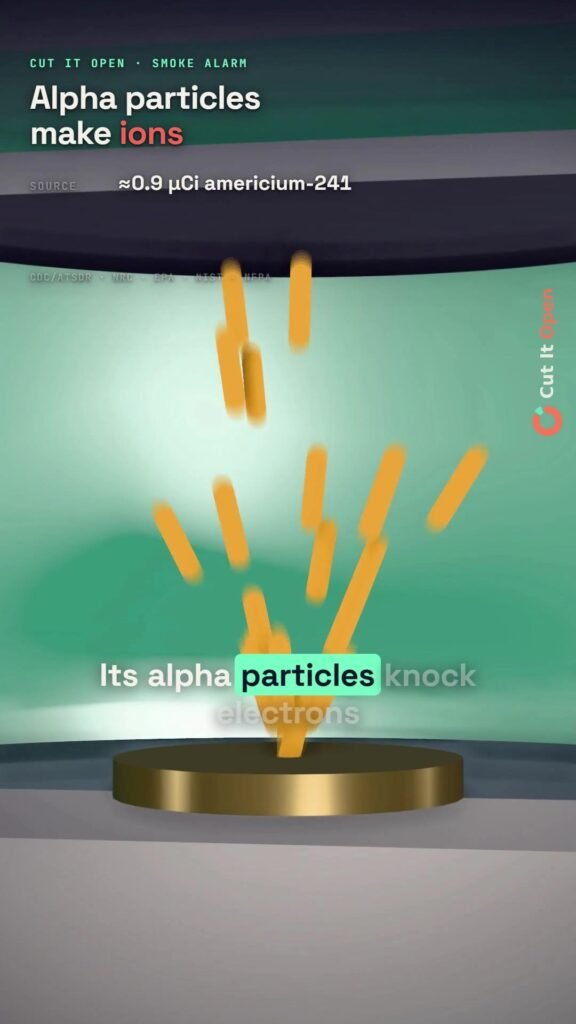
Is There a Radioactive Speck on Your Ceiling?
 49 sec
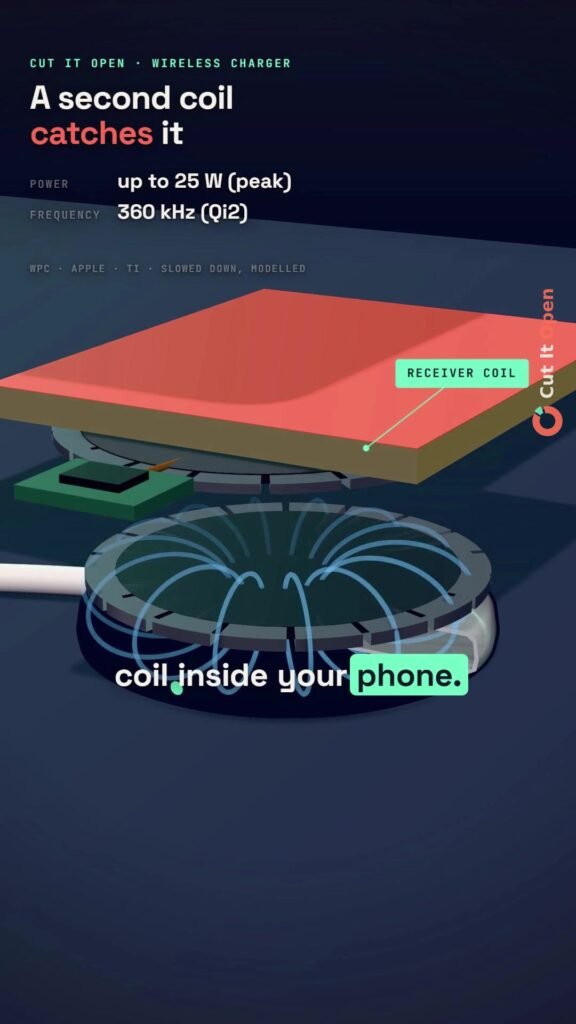
How Does Your Phone Charge Without a Plug?
 49 sec
How Does an Airbag Fill Faster Than a Blink?
 48 sec
How Does a CGM Read Your Sugar?
 48 sec
How Do Wireless Earbuds Work?
 45 sec
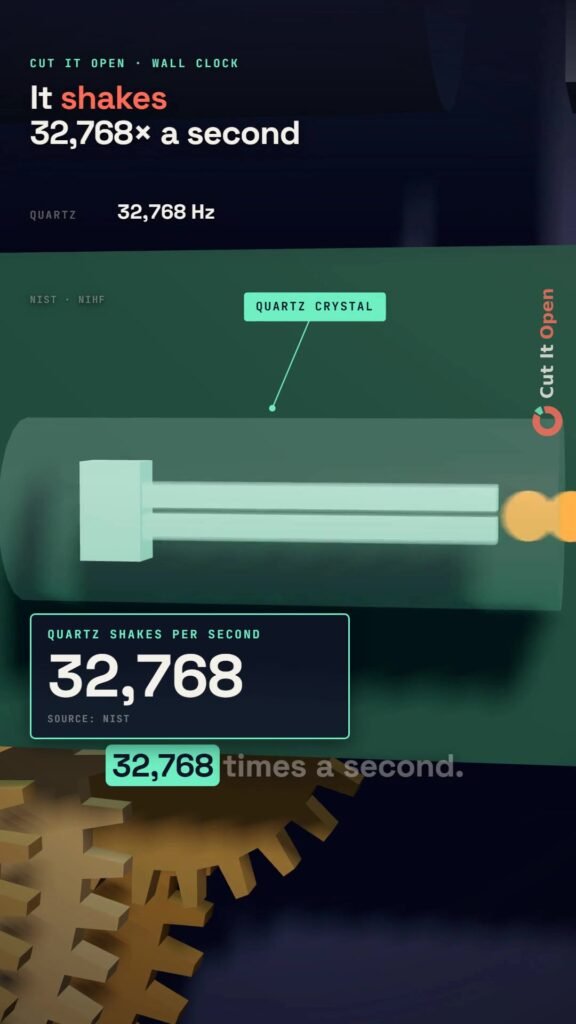
How Does a Clock Know the Time?
 24 sec
Fire in One Click
 24 sec
Light Through Your Fingertip
 25 sec
Spinning Magnets Into Electricity
 23 sec