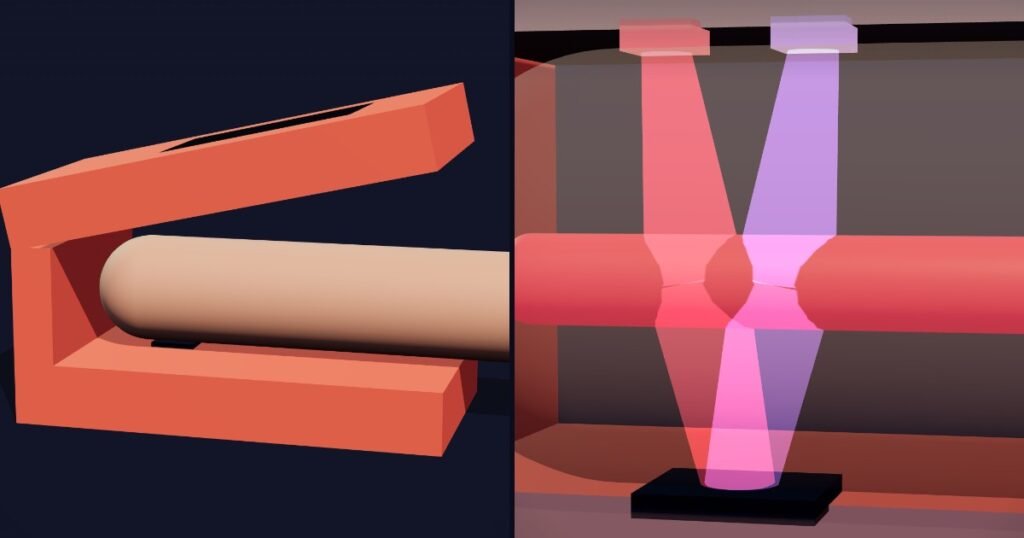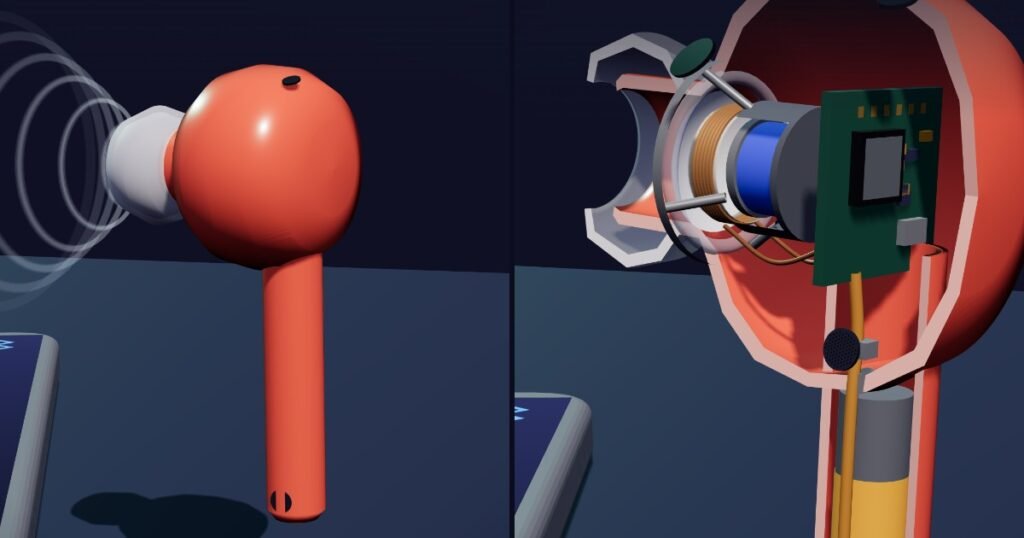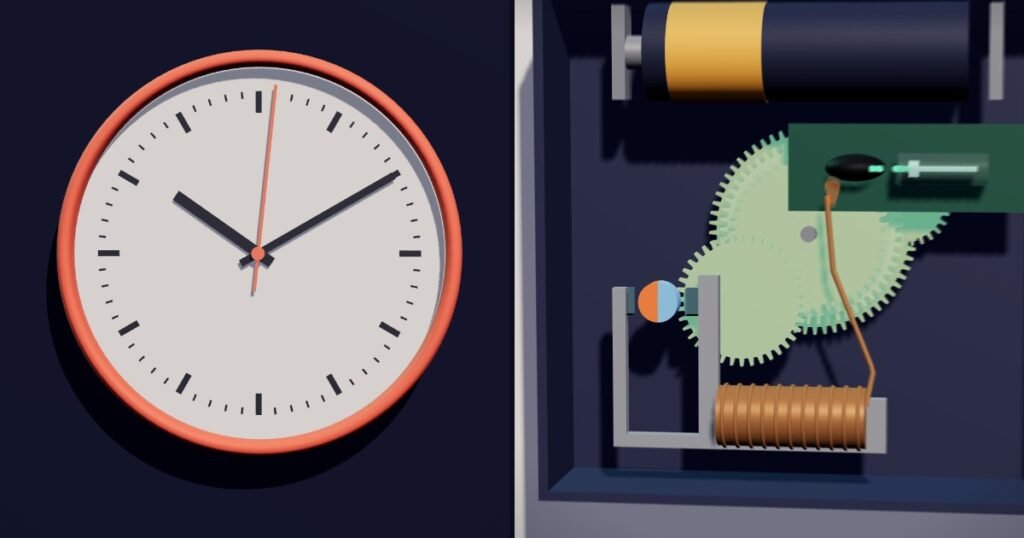
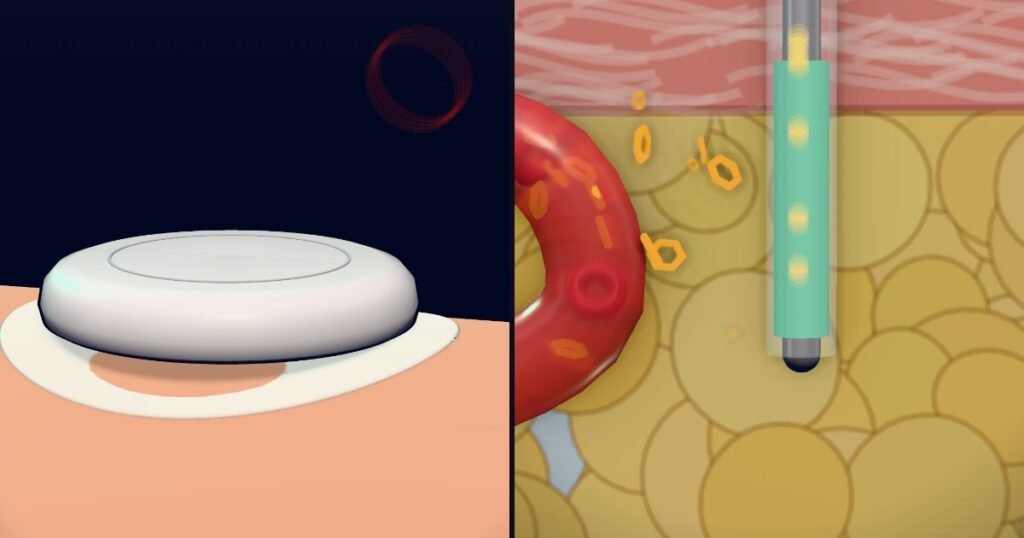
The Eversense 365 sensor sits fully under the skin for up to a year. The FDA describes it as radiofrequency-powered, and its silicone collar releases a small dose of an anti-inflammatory steroid locally (1.75 mg of DXA, dexamethasone acetate, per the FDA) to minimize the body’s local reaction to it.
Anatomy: what's inside
Applicator
A single-use tool that inserts the sensor. The FDA describes the Dexcom G7’s as a single-button-press, spring-deployed mechanism.
Insertion needle
Guides the sensor tail under the skin, then retracts into the applicator. Only the sensor stays in.
Sensor wire or tail
A thin filament that sits in the fluid under the skin (the FDA calls the G7’s a small and flexible wire). The FDA lists the FreeStyle Libre 3’s tail at 5.5 mm deep and 0.3 mm wide.
Component: SensorEnzyme coating
Glucose oxidase on enzyme-based sensors. It reacts with glucose and sends electrons into the electrode. The Eversense 365 uses a fluorescent indicator instead.
Adhesive patch
A medical-grade adhesive designed to hold the patch on the skin for the wear period.
Battery
Powers the on-skin electronics. The FDA says the Libre 3 sensor uses a silver oxide battery. The implanted Eversense sensor is radiofrequency-powered instead.
Component: BatteryElectronics and algorithm
Sample the sensor current and convert it into an estimated glucose value in mg/dL, on the patch itself in the Libre 3 and G7.
Bluetooth radio and antenna
Send each reading to a phone app or receiver using Bluetooth Low Energy. The FDA lists ranges of 33 feet for the Libre 3 and 20 feet for the G7.
Component: AntennaApp or receiver
Shows the current value, a trend arrow and a graph, and, on many models, alerts you when glucose goes too high or too low.
It reads the fluid under your skin, not your blood
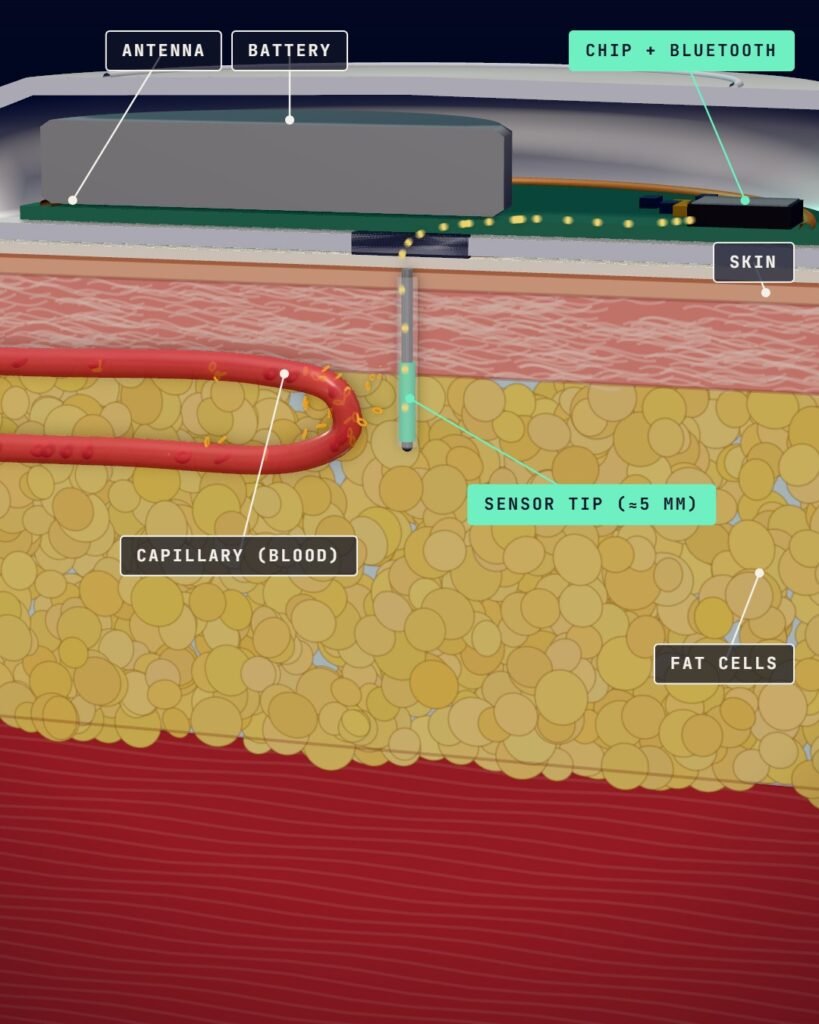
A continuous glucose monitor, or CGM, is a small patch, often worn on the arm or belly, that tracks your glucose day and night. The National Institute of Diabetes and Digestive and Kidney Diseases (NIDDK) describes it as a device that estimates your glucose level every few minutes, using a tiny sensor inserted under your skin.
The key word is estimates. The sensor doesn’t sit in a blood vessel. It sits in the interstitial fluid, the thin layer of fluid between your cells. The FDA’s review of the Dexcom G7 says the system detects glucose from the fluid just beneath the skin. Glucose moves from your blood into that fluid, so the two track each other closely, but not perfectly, and not at the same moment.
This is how the devices work, not medical advice: follow your device’s instructions and your care team.
What’s inside the patch
A single-use applicator pushes a needle that guides a thin sensor under the skin. In the FDA summary for the FreeStyle Libre 3, the needle then retracts into the applicator, and the sensor stays on the skin with a medical-grade adhesive. Abbott’s application guide puts it plainly: the needle does not stay in your arm.
What stays is the sensor. The FDA lists the Libre 3 sensor tail at 5.5 millimeters deep and 0.3 millimeters wide. For the Dexcom G7, the 510(k) summary describes a small and flexible wire under the skin that converts glucose into electrical current.
Above the skin sits a small puck: a battery, circuitry that measures the sensor’s current, and a Bluetooth Low Energy radio with its antenna. The Libre 3 sensor runs on a silver oxide battery, according to the FDA.
Wear time depends on the model. The G7 lasts up to 10 days plus a 12-hour grace period, and the Dexcom G7 15 Day, cleared for adults 18 and older, up to 15. Abbott currently lists 14 days for the Libre 3 sensor and 15 for the Libre 3 Plus.
An enzyme turns sugar into a tiny current
In enzyme-based sensors such as the G7 and Libre 3, the tip is coated with an enzyme called glucose oxidase. The FDA describes the Dexcom version: the enzyme speeds up the oxidation of glucose and produces hydrogen peroxide, which generates a current proportionate to the glucose in the fluid.
Abbott’s sensors are described in different terms. A 2023 study in the journal Sensors describes the FreeStyle Libre 2 as using “wired enzyme technology”: an osmium mediator and glucose oxidase fixed together on the electrode. For the Libre 3, the FDA says the enzyme oxidizes glucose and transfers electrons to an electrode, producing a current.
Either way: more sugar, more current. In the Libre 3 and G7, the patch itself, not your phone, turns that current into a number.
From sugar to the number on your phone
- Diffuse. Glucose leaves tiny blood vessels and spreads into the fluid around the sensor tip.
- React. Glucose oxidase on the tip oxidizes the glucose, and the reaction sends electrons into the electrode.
- Measure. The electronics sample the current. More glucose gives a stronger current.
- Convert. An onboard algorithm turns the current into an estimated glucose value in mg/dL.
- Send. Bluetooth Low Energy carries the value to a phone app or receiver.
- Repeat. The Libre 3 updates every minute, the G7 every 5 minutes.
Both FDA summaries say readings should be interpreted from trends and several readings over time, not one value alone.
Why the number runs a few minutes behind
Glucose reaches the fluid after it reaches your blood, so the sensor sees changes a little late. In a 2010 review in the Journal of Diabetes Science and Technology, Rebrin and colleagues found no evidence that the true physiological delay is longer than 5 to 10 minutes. Longer delays, they wrote, can be explained by delays in the filtering routines inside CGM devices.
Abbott’s safety information says interstitial and blood glucose can differ when levels change quickly, for example after eating, taking insulin or exercising. Then a CGM reading and a fingerstick can disagree.
Not every CGM uses an enzyme
The Eversense 365, made by Senseonics, uses light instead. According to the FDA decision summary, its sensor carries a fluorescent indicator that binds glucose reversibly and glows more brightly when it does. An optical system in the sensor measures the change.
The sensor, about 3.5 by 18.3 millimeters, is inserted under the skin by a healthcare provider and is indicated for up to 1 year in adults. The FDA describes it as a radiofrequency-powered device that sends its readings to an externally worn transmitter. Unlike the factory-calibrated Libre 3 and G7, it needs fingerstick calibrations: four in the first 36 hours after warm-up, one a day through day 13, then one a week.
At least one CGM now needs no prescription. In March 2024 the FDA cleared the Dexcom Stelo, the first over-the-counter CGM, for adults who don’t use insulin. The FDA said it is not for people with problematic hypoglycemia, because it isn’t designed to alert users to that potentially dangerous condition.
A smartwatch that reads glucose by itself is another matter. The FDA has warned that it has not authorized any smartwatch or smart ring meant to measure or estimate blood glucose on its own.
Reading the numbers: time in range
The Libre 3, G7 and Eversense 365 report glucose from 40 to 400 mg/dL.
Many apps summarize your day as time in range. A 2019 international consensus in Diabetes Care set a target range of 70 to 180 mg/dL, with a goal of more than 70 percent of readings in it for most adults with type 1 or type 2 diabetes, and more than 50 percent for older or high-risk people. The panel agreed that targets must be personalized. Your targets may differ, so set them with your care team.
Wearing it well
- Use the approved site. Abbott says Libre 3 sensors go only on the back of the upper arm. Dexcom’s site guide approves the back of the upper arm for the G7, placed away from waistbands, scars, tattoos, irritation and bones, and at least 3 inches from an insulin pump infusion set or injection site.
- Rotate. Dexcom says to change the site with each sensor. Abbott suggests switching arms.
- Prepare the skin. Abbott’s guide says to wash with non-moisturizing, fragrance-free soap, clean with an alcohol wipe, and let the skin dry completely, free of lotion.
- Know your water limits. Abbott rates the FreeStyle Libre 3 Plus water-resistant in up to 1 meter (3 feet) for no longer than 30 minutes. Dexcom says the G7 sensor is waterproof to 8 feet, but its receiver isn’t, and Bluetooth won’t send readings while you’re immersed.
- Watch for snags and skin changes. Abbott warns about doorways, car doors and seat belts. NIDDK notes that the sticky patches can redden or irritate some people’s skin.
When to double-check with a fingerstick
The Libre 3 and G7 are cleared to replace fingerstick testing for diabetes treatment decisions. You still need a blood glucose meter. Check with one, or follow your device’s labeling, in these cases:
- Your symptoms don’t match the reading. Dexcom and Abbott both say so, and to seek medical attention when needed.
- There’s no number. That includes a G7 screen without both a number and a trend arrow.
- The sensor is new. The G7 calls for a meter during warm-up. Abbott’s safety information says Libre 3 readings can’t be used for treatment decisions in the first 12 hours.
- Something may interfere. The FDA says G7 readings run falsely high with more than a standard acetaminophen dose (up to 1 gram every 6 hours in adults) or with hydroxyurea, and its labeling says not to use the G7 for treatment decisions while taking hydroxyurea. Abbott says more than 500 mg of vitamin C a day may affect Libre 3 readings, and more than 1,000 mg may falsely raise Libre 3 Plus readings. For the Eversense 365, tetracycline-class antibiotics may falsely lower readings, and its labeling says not to rely on readings while taking them.
- Your model needs calibration. The Eversense 365 does, and NIDDK notes that some other models may too.
Scan rules differ by model. Dexcom’s labeling says not to wear any G7 part during an MRI or diathermy. The Eversense 365 transmitter must come off before an MRI. Abbott’s current safety information allows Libre 3 sensors in a 1.5T or 3T MRI only under listed conditions, and says to remove them before diathermy. Check your model’s instructions before any scan.
How it works, step by step
Insert
An applicator pushes a needle that guides a thin sensor under the skin, then the needle retracts.
Diffuse
Glucose moves from tiny blood vessels into the fluid between your cells, where the sensor tip sits. It arrives a few minutes after it reaches your blood.
React
In enzyme-based sensors, glucose oxidase on the tip oxidizes glucose, and the reaction sends electrons into the electrode.
Measure
The electronics sample the current. More glucose gives a stronger current.
Convert
An algorithm on the patch turns the current into an estimated glucose value in mg/dL.
Send
Bluetooth Low Energy sends the number to your phone or receiver, every minute on the Libre 3 and every 5 minutes on the G7.
Myth vs fact
A CGM measures the sugar in your blood.
It estimates the glucose in the fluid between your cells. That fluid follows your blood a few minutes behind; a review in the Journal of Diabetes Science and Technology found no evidence that the true physiological delay is longer than 5 to 10 minutes.
With a CGM, you’ll never need a fingerstick again.
Models such as the Dexcom G7 and FreeStyle Libre 3 are cleared to replace routine fingersticks for treatment decisions, but their labeling says to use a blood glucose meter when readings don’t match your symptoms or no number is shown. The Eversense 365 still needs scheduled fingerstick calibrations.
A smartwatch or smart ring can measure your glucose through the skin.
The FDA says it has not authorized, cleared or approved any smartwatch or smart ring meant to measure or estimate blood glucose on its own. Watch apps that show data from an FDA-authorized CGM are a different thing.
Every CGM works the same way.
The Dexcom G7 and FreeStyle Libre 3 use an enzyme that makes a current. The implanted Eversense 365 uses a fluorescent indicator and light. Readings come every 1, 5 or 15 minutes, and wear times run from about 10 days to a year, by model.
A CGM gives an estimate of the glucose in the fluid under your skin, not a diagnosis, and it can lag behind your blood glucose. If a reading doesn’t match your symptoms, or no number is shown, use a blood glucose meter (a fingerstick), as Dexcom and Abbott labeling says, and get medical attention when needed. Some medicines and supplements can affect readings on specific models, and some models still need fingerstick calibration. Follow your device’s instructions and your care team.
Questions people ask
How does a continuous glucose monitor work?
A thin sensor under the skin sits in the fluid between your cells. In enzyme-based models such as the Dexcom G7 and FreeStyle Libre 3, glucose oxidase on the sensor reacts with glucose and makes a small current that rises with the glucose level. Electronics on the patch turn the current into an estimated glucose value and send it to your phone or receiver by Bluetooth.
Why doesn’t my CGM match my fingerstick?
A CGM reads the fluid under your skin, and a fingerstick reads blood. Abbott says the two can differ when glucose is changing quickly, for example after eating, taking insulin or exercising. If a reading doesn’t match your symptoms, manufacturers say to use your blood glucose meter for treatment decisions. Follow your device’s instructions and your care team.
How long does a CGM sensor last?
It depends on the model. The Dexcom G7 lasts up to 10 days plus a 12-hour grace period, and the G7 15 Day up to 15 days for adults. Abbott lists 14 days for the FreeStyle Libre 3 sensor and 15 for the Libre 3 Plus. The implanted Eversense 365 is indicated for up to 1 year.
Can I shower or swim with a CGM?
Many sensors can get wet, within limits that depend on the model. Abbott rates the FreeStyle Libre 3 Plus water-resistant in up to 1 meter (3 feet) for no longer than 30 minutes. Dexcom says the G7 sensor is waterproof to 8 feet, but its receiver is not. Check your own device’s instructions.
Do I need a prescription for a CGM?
Many CGMs, including the Dexcom G7, FreeStyle Libre 3 and Eversense 365, require a prescription. In 2024 the FDA cleared the Dexcom Stelo as the first over-the-counter CGM, for adults who don’t use insulin. The FDA says it is not for people with problematic hypoglycemia, and that users should talk to their healthcare provider before making medical decisions based on it.
Sources
Published by Cut It Open. Checked against every listed source before publishing.
Facts last verified 2026-11-03
Published November 4, 2026 · Updated November 3, 2026
This explains how a device or the body works. It is not medical advice. For anything about your own health, talk to a qualified health professional. Medical disclaimer.