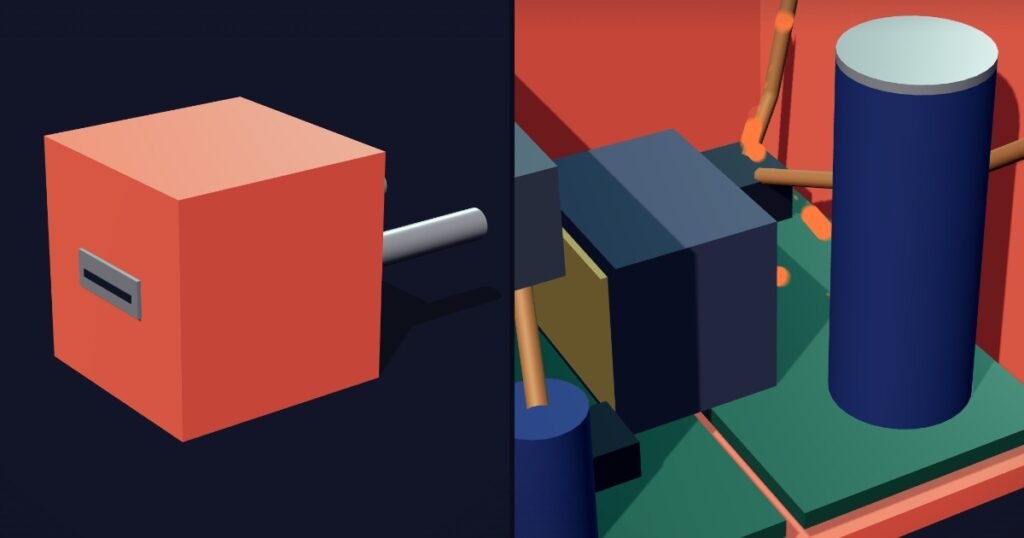
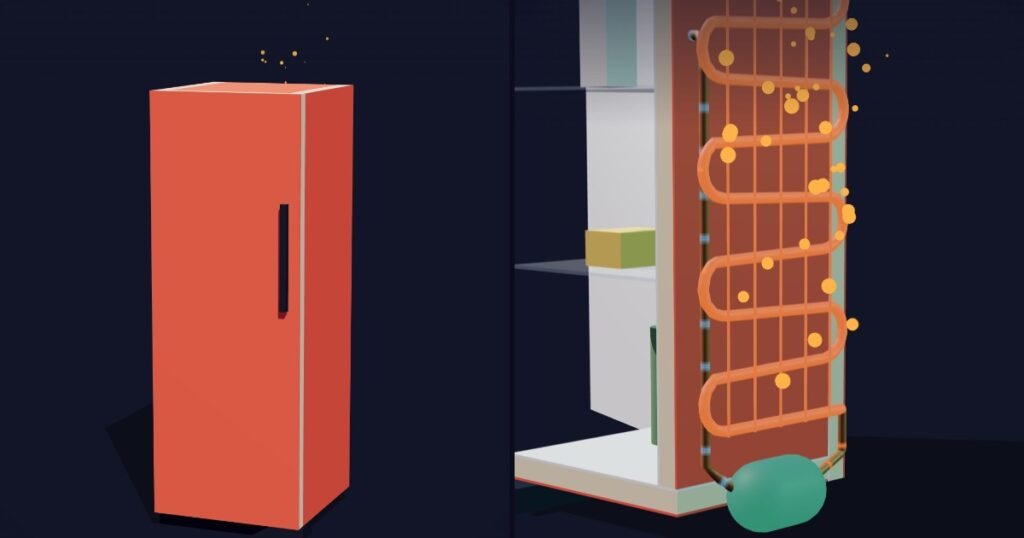
A heat pump water heater runs on the same cycle as your fridge. ENERGY STAR describes it as a refrigerator working in reverse: it moves heat into a space instead of out of one.
Anatomy: what's inside
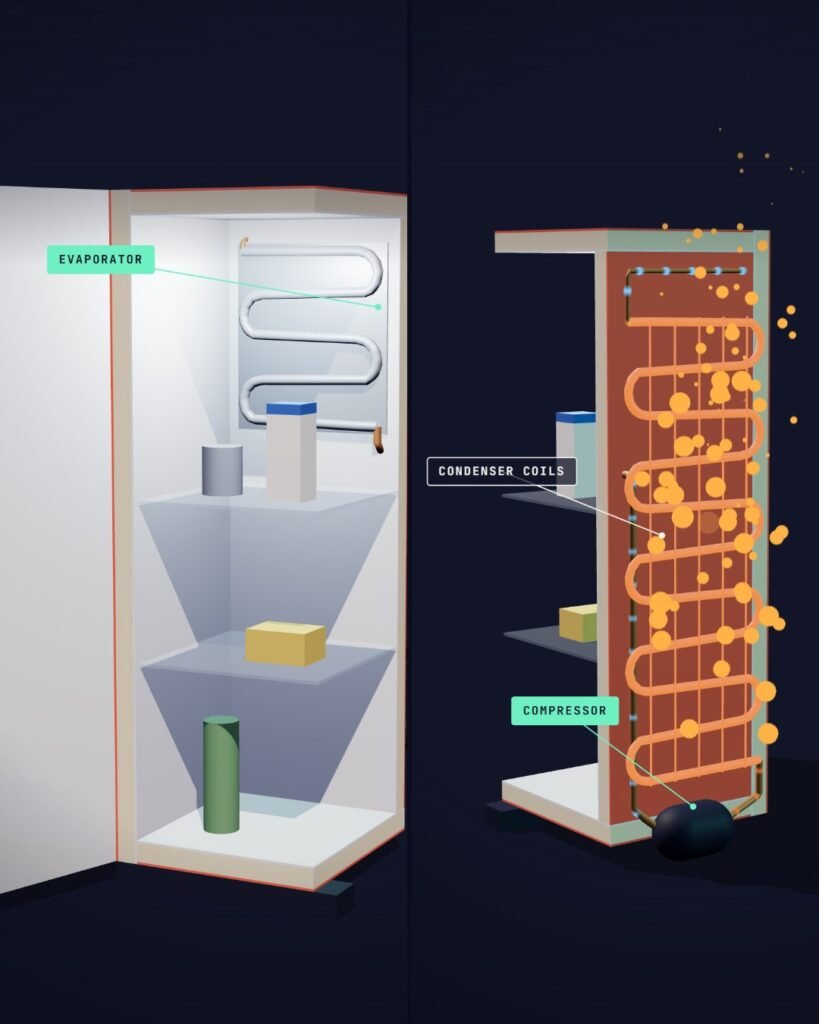
Compressor
An electric pump that squeezes refrigerant vapor, raising its pressure and temperature. It drives the whole loop and is the part you hear humming.
Component: CompressorCondenser coils
Tubing outside the insulated box, on the back or underneath. The hot refrigerant releases its heat here and condenses into a liquid.
Expansion device
A narrow restriction that drops the refrigerant’s pressure, so the liquid becomes very cold before it enters the cabinet.
Component: ValveEvaporator
Coils inside the cabinet. The cold refrigerant absorbs heat from the air around your food and boils back into a vapor.
Fans
Move air across the evaporator to spread the cold through the compartments, and across the condenser to carry heat away.
Component: Electric MotorThermostat or temperature sensor
Tells the control when the cabinet is too warm, so it can start the compressor, or speed it up in an inverter model.
Component: ThermostatDefrost heater
In frost-free models, briefly warms the evaporator to melt frost. The water drains to a pan beneath the fridge.
Component: Heating ElementA fridge moves heat. It doesn’t make cold
Open the door and the cold air feels like something the fridge produced. It isn’t. No part inside a refrigerator manufactures cold. As ENERGY STAR puts it, a refrigerator removes heat from an enclosed box and expels that heat to the surrounding air. What stays inside feels cold because it holds less heat than before.
That sounds like a play on words, but it explains almost everything about the machine: why the back of it is warm, why it hums on and off, why its coils collect dust, and why leaving the door open never cools a kitchen.
The hard part is direction. Heat flows on its own from warm things to cold things, never the other way. Your kitchen is warmer than the inside of the fridge, so heat is always leaking in through the walls and every time the door opens. Pushing it back out, uphill, takes energy. That is the compressor’s job.
The trick: a liquid that boils below freezing
The heat is carried by a refrigerant, a fluid that circulates through a sealed loop of tubing. What makes a refrigerant useful is how easily it switches between liquid and vapor. When a liquid boils, it soaks up a large amount of heat without getting any warmer. When the vapor condenses back into a liquid, it gives that heat away again.
The temperature at which this happens depends on pressure. At low pressure, the refrigerant boils at a temperature colder than the inside of your freezer. At high pressure, the same fluid condenses at a temperature warmer than your kitchen. So by squeezing the refrigerant in one part of the loop and letting it expand in another, the fridge makes it boil, and absorb heat, inside the cabinet, then condense, and release heat, outside it.
Engineering notes from the University of Florida describe this vapor-compression cycle with four basic parts: a compressor, a condenser, an expansion valve and an evaporator. Heat is absorbed at a low temperature and rejected at a higher one, again and again.
One loop, four stops
Follow a single bit of refrigerant around the loop:
- Compressor. The vapor is squeezed. Its pressure and temperature both rise until it is hotter than the room.
- Condenser. In the coils outside the insulated box, the hot vapor gives its heat to the kitchen air and condenses into a liquid.
- Expansion device. The liquid is forced through a narrow restriction. Its pressure drops sharply and it becomes very cold.
- Evaporator. Inside the cabinet, the cold refrigerant absorbs heat from the air around your food, boils back into a vapor and returns to the compressor.
Nothing gets used up. The same refrigerant goes around for the life of the fridge, picking heat up on the inside and dropping it off on the outside.
Why the back of your fridge feels warm
All the heat pulled out of your food has to go somewhere, and the condenser is where it leaves. On older fridges you can see it as a black grid of tubing on the back. Many newer models hide it underneath or behind panels, where condenser and evaporator fans move air across the coils.
The condenser doesn’t only release the heat taken from the food. It also releases the energy the compressor put in to do the job. So the heat that leaves a fridge is always more than the heat it removed from inside. That is why a fridge with its door left open will never cool a kitchen. The room ends up slightly warmer instead.
It also explains two pieces of advice from ENERGY STAR: keep the fridge away from heat sources such as an oven, and keep the condenser coils clean if you have an older model. A coil coated in dust, or sitting next to a hot appliance, struggles to get rid of heat, so the compressor has to run longer.
What the thermostat really controls
The thermostat, or the temperature sensor and control board in a newer fridge, does not set how cold the refrigerant gets. It decides when the compressor runs.
In a conventional fridge, the compressor has one speed. When the inside warms past the set point, the control switches it on at full power. Once the cabinet is cold enough, it switches off. Whirlpool notes that a single click can occur when the compressor starts or stops. Turning the dial colder doesn’t make the compressor work any harder. It only makes it run for longer before it rests.
Many newer fridges use a variable-speed, or “inverter”, compressor instead. Rather than cycling between full power and off, it changes its motor speed to match how much cooling is needed. Compressor maker Secop says its variable-speed compressors typically run at minimum speed during normal operation, which is where they are most efficient. It reports energy savings of up to 40 percent, depending on the system design, and average noise up to 5 dB(A) lower. Those are a manufacturer’s best-case figures, but the principle is simple: a motor that runs gently most of the time wastes less than one that keeps starting and stopping at full speed.
Where the frost goes in a frost-free fridge
The evaporator is the coldest surface in the fridge, and moist air keeps reaching it, from food and from the warm room air that rushes in whenever you open the door. That moisture freezes onto the evaporator as frost. Left alone, frost acts like a blanket on the coil and stops it absorbing heat, which is why older fridges had to be defrosted by hand.
A frost-free fridge does the defrosting for you. Every so often, a timer or control board pauses cooling and switches on a small heater next to the evaporator. The frost melts, the water runs down a drain into a pan beneath the refrigerator, and normal cooling starts again.
This routine is behind several sounds that worry new owners. GE Appliances lists a hissing or sizzling noise when water drips onto the defrost heater, a drip as defrost water falls into the drain pan, and a clicking or tick-tock noise from the defrost timer switching on and off. A boiling or gurgling sound is caused by refrigerant circulating through the tubes.
What’s inside the tubes
The refrigerant in your fridge depends on when and where it was made. For years, many household fridges used HFC-134a. In the United States, the EPA has listed HFC-134a as unacceptable in new household refrigerators and freezers since January 1, 2021. Two hydrocarbons are among the accepted substitutes: isobutane, known as R-600a, and propane, known as R-290. Both are listed as acceptable subject to use conditions.
Isobutane and propane are flammable. Those refrigerants come with EPA use conditions, and that is one more reason the sealed system is a job for a certified technician, not a weekend repair. The rating label on a fridge usually names the refrigerant it contains.
The right temperature, and how to check it
The FDA advises keeping the refrigerator at or below 40°F (4°C) and the freezer at 0°F (−18°C). ENERGY STAR suggests a range of 35 to 38°F (about 2 to 3°C) for the fridge.
The numbers on many fridge dials are settings, not degrees, so they can’t tell you the real temperature. The FDA says appliance thermometers are the best way of knowing the real temperature, and they are generally inexpensive. Put one in the middle of a shelf, leave it overnight, then adjust the control one step at a time.
Small habits that help the machine
- Check the door seals. ENERGY STAR advises making sure they are airtight and replacing them if they are not. A leaky seal lets warm, moist air in all day.
- Give the condenser space. Keep the fridge away from the oven and other heat sources.
- Clean the coils on older models. Follow the user manual for cleaning them safely; unplugging the fridge first is standard practice.
- Close the door quickly. Every opening lets in warm air that has to be cooled, and moisture that ends up as frost.
- When you replace a fridge, compare efficiency. ENERGY STAR certified refrigerators are about 9 percent more energy efficient than models that meet the US federal minimum standard.
How it works, step by step
Compress
The compressor squeezes refrigerant vapor. Its pressure and temperature rise until it is hotter than your kitchen.
Condense
In the coils outside the box, the hot vapor gives its heat to the room and condenses into a liquid.
Expand
The liquid passes through a narrow restriction. Its pressure drops sharply and it becomes very cold.
Evaporate
Inside the cabinet, the cold refrigerant absorbs heat from the food compartment, boils into a vapor and returns to the compressor to start again.
Myth vs fact
A fridge creates cold air.
It removes heat and releases it outside the box. What is left behind feels cold because it holds less heat.
Leaving the fridge door open will cool the kitchen.
The heat pulled from inside is released into the same room, along with the energy the compressor uses. The kitchen ends up slightly warmer.
Turning the dial to the coldest setting cools food faster.
In a conventional fridge the compressor already runs at full speed when it is on. A colder setting only makes it run longer, so everything ends up colder, not cooled faster.
A hot back or a sizzling sound means the fridge is broken.
A warm condenser is how the heat leaves. Sizzling during defrost is water dripping onto the defrost heater, which GE Appliances lists as a normal sound.
The refrigerant loop is sealed and under pressure, and many newer fridges use isobutane (R-600a), which is flammable. Never cut, drill or puncture the tubing. Unplug the fridge before cleaning the coils, and leave any repair to the sealed system to a certified technician.
Questions people ask
Why is the back or bottom of my fridge warm?
That is the condenser releasing the heat taken out of your food, together with the energy used by the compressor. A warm condenser is normal. Keep it free of dust and away from the oven so it can shed heat easily.
What temperature should my fridge be?
The FDA advises 40°F (4°C) or below for the refrigerator and 0°F (−18°C) for the freezer. ENERGY STAR suggests 35 to 38°F for the fridge. Use an appliance thermometer to check, because dial numbers are often settings, not degrees.
Why does my fridge click, gurgle or sizzle?
A click is usually the compressor or the defrost timer switching on or off. Gurgling or boiling sounds come from refrigerant moving through the tubes. Sizzling happens when defrost water drips onto the defrost heater. Manufacturers list all of these as normal sounds.
What is an inverter compressor?
A compressor that changes its motor speed to match the cooling needed, instead of switching between full power and off. It usually runs slowly most of the time, which can save energy and reduce noise.
Does a frost-free fridge ever defrost?
Yes, automatically. Every so often it pauses cooling and a small heater melts the frost on the evaporator. The water drains to a pan beneath the fridge.
Sources
Published by Cut It Open. Checked against every listed source before publishing.
Facts last verified 2026-10-25
Published October 23, 2026 · Updated October 25, 2026